Aesthetics, Criticism and Theory (ACT)
On Beauty: A Cross-Cultural Exploration of Aesthetic Thought
The concept of Beauty has long been presented through a singular, Western lens, emphasising the ancient Greek ideal of perfect proportions, the Renaissance pursuit of realism, or Kant’s philosophy of disinterested judgment. Yet, for millennia, cultures across the globe have developed their own rich, complex, and often radically different conceptions of beauty, its value and its power in society. This year, the Aesthetics, Criticism and Theory programme at Jnanapravaha Mumbai seeks to decentralise the dominant Western notion of beauty by embarking on an exploration of this concept as a multifaceted, culturally constructed and nuanced human experience.
Our journey begins with an examination of the foundations of Western thought in the ancient Greek and later Roman world. How did Beauty come to be located in mathematical harmony and what did it mean for it to then be elevated to a transcendent, eternal Form by Plato, an ideal that the material world could only imitate imperfectly? How did this form correspond to the form of The Good, and ultimately to Truth? And how did later thinkers like Plotinus synthesise these ideas, framing beauty as an emanation from the divine, cementing the legacy of idealism and proportion that have formed the basis of Western thought?
Between these classical foundations and the Enlightenment, the Renaissance marks a crucial reorientation in the understanding of beauty. The human body, architecture, and painting became sites where harmony, symmetry, and perspective could be studied, codified, and perfected. Yet, this was not merely a technical exercise: the Renaissance vision of beauty was deeply tied to humanism, placing the human figure and human perception at the centre of aesthetic inquiry. Did this renewed emphasis on realism and the visible world bring beauty closer to lived experience, or did it simply reformulate classical ideals in a new visual language?
Ultimately, we examine how the Enlightenment project codified the concept of beauty to conform to its own standards. Edmund Burke’s empirical approach distinguished the beautiful, rooted in pleasure, smoothness, and delicacy, from the sublime’s terrifying awe. Immanuel Kant, however, elevated the discourse by defining aesthetic judgment as disinterested and universal—a subjective feeling yet demanding collective agreement—establishing taste as a crucial faculty. For G. W. F. Hegel, art became the sensuous manifestation of the Absolute, a crucial stage in Spirit’s journey toward self-knowledge, though one ultimately superseded by religion and philosophy. Did the Enlightenment’s rationalist framework ultimately demystify beauty, stripping it of its transcendent and emotional power to conform to more empirical standards, or can we understand modernity’s relationship to beauty to be more complex, allowing for varied cultural interpretations to continue to hold purchase?
In Islamic thought, beauty is not merely an aesthetic category but a fundamental divine attribute—one of the names of God, al-Jamīl (the Beautiful). The cosmos itself, in its order, harmony, and intricacy, is understood as a manifestation of divine beauty, a sign that points beyond itself toward the Creator. Philosophers and mystics such as Al-Ghazali and Ibn Arabi explored how the perception of beauty could lead the soul toward spiritual knowledge and remembrance. In a different yet complementary register, the work of Ibn al-Haytham offers a strikingly material and perceptual account of beauty, where it in this sense, emerges through the interaction between external form and internal processing – an insight that anticipates later theories of perception. Artistic creation, whether in calligraphy, architecture, or poetry, thus becomes an act of devotion—a striving toward perfection that reflects, however fleetingly, the divine source. Does this mean that true beauty is ultimately defined by its capacity to evoke transcendence, and that the human artist serves as a conduit through which the imperceptible becomes momentarily visible?
In the second half of the year, we turn to classical Indic thought, where we focus on the foundations of Rasa theory through Bharata Muni’s Natyashastra, where beauty is not conceived as a formal quality, but that resides within an experiential state of bliss (ananda). Here, emotion is the essential bridge between a performance and its perceiver, and the resultant ananda is a transcendent, participatory reception, rather than a passive observation or appreciation of aesthetic qualities. Could this framework compellingly reframe our very understanding of aesthetics? If ‘beauty’, in its purest form, lies in the profound emotional experience of an audience, can it really be inferred as a universal ideal, concept or value?
In classical Chinese thought, beauty is profoundly intertwined with ethics, harmony, and the rhythms of the natural world. Within the Confucian tradition, articulated by Confucius, beauty (mei) is inseparable from moral goodness (ren) and social order; the cultivation of beauty is thus essential to the cultivation of a just and harmonious society. In contrast, Daoist thinkers such as Laozi and Zhuangzi celebrated spontaneity, simplicity, and the unadorned. Beauty emerges not through refinement, but through alignment with the Dao—the effortless unfolding of the natural world. This perspective finds expression in the idea of qiyun shandong (spirit resonance), where the vitality of a subject, rather than its formal perfection, determines its aesthetic power. Why did Daoist thought privilege the raw and the natural over the cultivated, and what does it mean to locate beauty in the dynamic life-force of things rather than their outward form?
Interspersed within the year-long focus on beauty, the ACT programme will also host two short lecture series, with the first on the art and material culture of Palmyra. As a crossroads of the Roman, Persian, and wider Near Eastern worlds, Palmyra offers a compelling case study of beauty shaped by exchange and hybridity. Its visual culture, seen in funerary reliefs, monumental architecture, and multilingual inscriptions, defies singular classification, blending classical and local forms. These lectures will explore how aesthetic values were negotiated in a cosmopolitan trading centre, and how material culture reveals the layered identities of a society defined by movement.
A parallel three-lecture series on Norman Sicily turns to the medieval Mediterranean to examine another extraordinary moment of cultural convergence. Under Norman rule, Sicily became a site where Latin Christian, Byzantine, and Islamic artistic traditions coexisted and intertwined, producing works of striking visual and conceptual richness. Rather than viewing these forms as mere eclecticism, this series asks how beauty functioned within a consciously plural court culture: as a language of power, a marker of legitimacy, and a medium through which difference was negotiated.
This year, the ACT programme ultimately asks us to reconsider what we mean when we speak of beauty. Is it a universal ideal grounded in proportion and harmony, an ethical force that shapes society, an emotional experience shared between artwork and audience, or a sign that points toward the divine? By placing these traditions in dialogue, the programme seeks not only to challenge the dominance of a singular aesthetic framework, but to open up a richer, more plural understanding of beauty—one that acknowledges its diverse meanings across cultures while recognising its enduring power in shaping how we see, feel, and inhabit the world.
Between the Eye and the Soul: Beauty in Islamic Thought
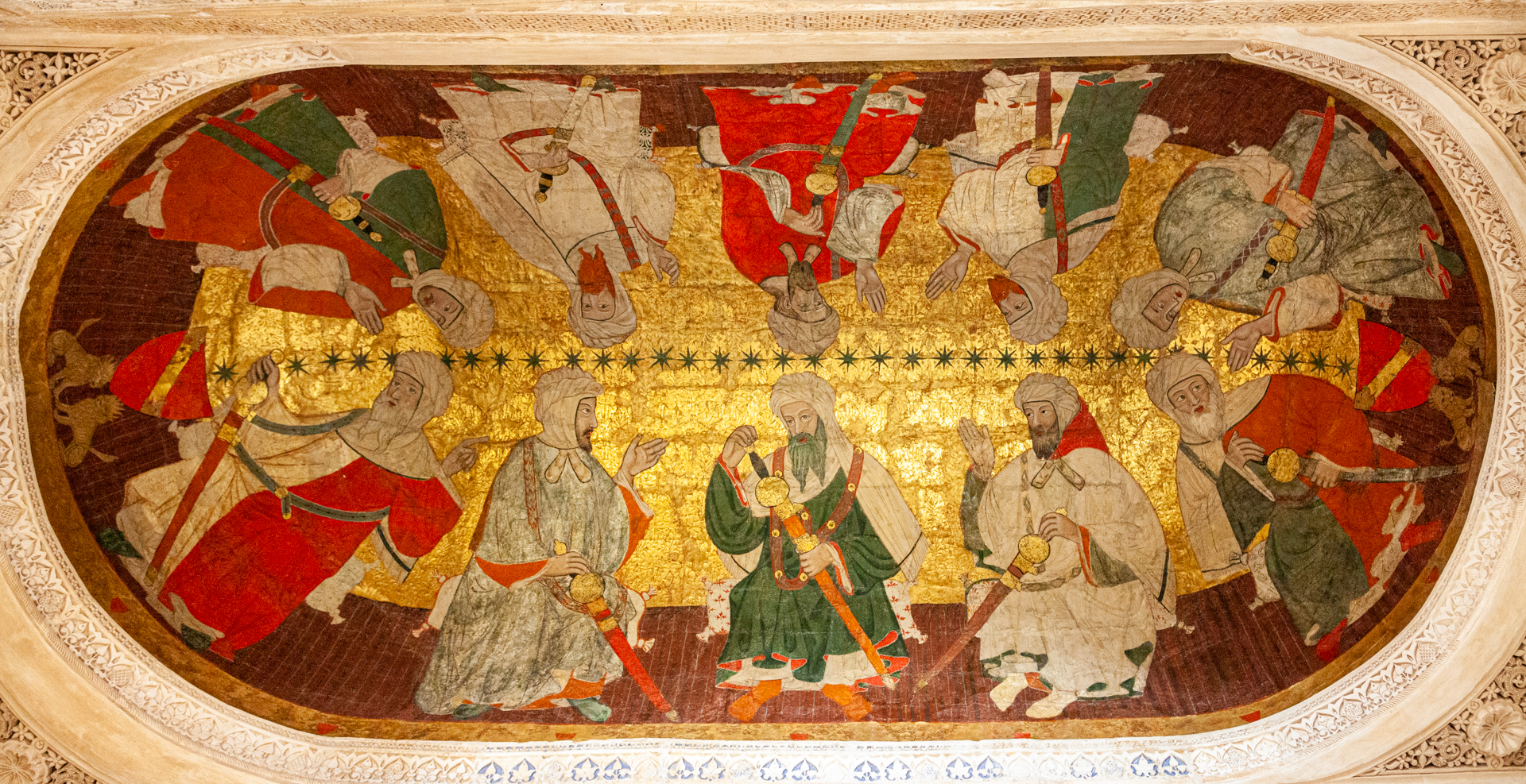
Image: Ceiling of the Hall of Kings, showing the first Nazaries sultans 1410 - 1424, Alhambra, Spain
In Islamic thought, beauty was never a question for artists alone. Rather, it was a question for theologians, philosophers, mystics, and poets, each asking what it means for the divine to leave its trace in the visible, audible, and felt world. In this second part of our year long examination of the question of beauty in world philosophies, we trace that question from its Quranic and theological roots through the great philosophers of the medieval Islamic world, into the geometry, light, and sensory culture of Islamic visual art, through the Sufi tradition, and into the modern world, tracing how the love of the beautiful leads us on a path toward the love of God.
Beginning with the philosophical and theological foundations of beauty in Quranic vocabulary through to the philosophical treatises of the greatest thinkers of the Islamic world from Avicenna to Ibn al-Haytham, we journey through the visual, material and devotional meanings embedded in art, architecture, poetry, calligraphy and music. Across six sessions led by three pathbreaking scholars, the series offers a sustained meditation on what beauty meant, and still means, in the Islamic intellectual tradition.
LECTURE SCHEDULE:
Tuesday, 3 November 2026
Problematizing the Concept of Beauty in the Framework of Islamic Art Making
Prof. Valerie Gonzalez
Thursday, 5 November 2026
Beauty as Theological Concept Underpinning Islamic Art
Prof. Valerie Gonzalez
Tuesday, 10 November 2026
The Rising of Beauty: Vision, Love, and the Imaginal World of Suhrawardī
Prof. Sara Kuehn
Tuesday, 17 November 2026
Imagining a Better Self: Living Sufi Aesthetics in the Contemporary World
Prof. Sara Kuehn
Tuesday, 24 November 2026
Pictures and Proprieties: the Visual Image in Islam
Prof. Jamal Elias
Tuesday, 1 December 2026
Beyond Art: Collective Emotion and Popular Culture
Prof. Jamal Elias
Classes, unless otherwise stated, are from 6:30 pm to 8:30 pm IST on Tuesdays.
Students are expected to make a sincere attempt to attend all classes. To obtain an PG Certificate, students must have at least 72% attendance at live online classes (held on Tuesday evening).
Please read the Terms and Conditions carefully before registering.
November 3, 5, 10, 17, 24 ; December 1, 2026
6:30 - 8:30 PM IST
Fees
On Beauty: Western Thought from Antiquity to the Enlightenment
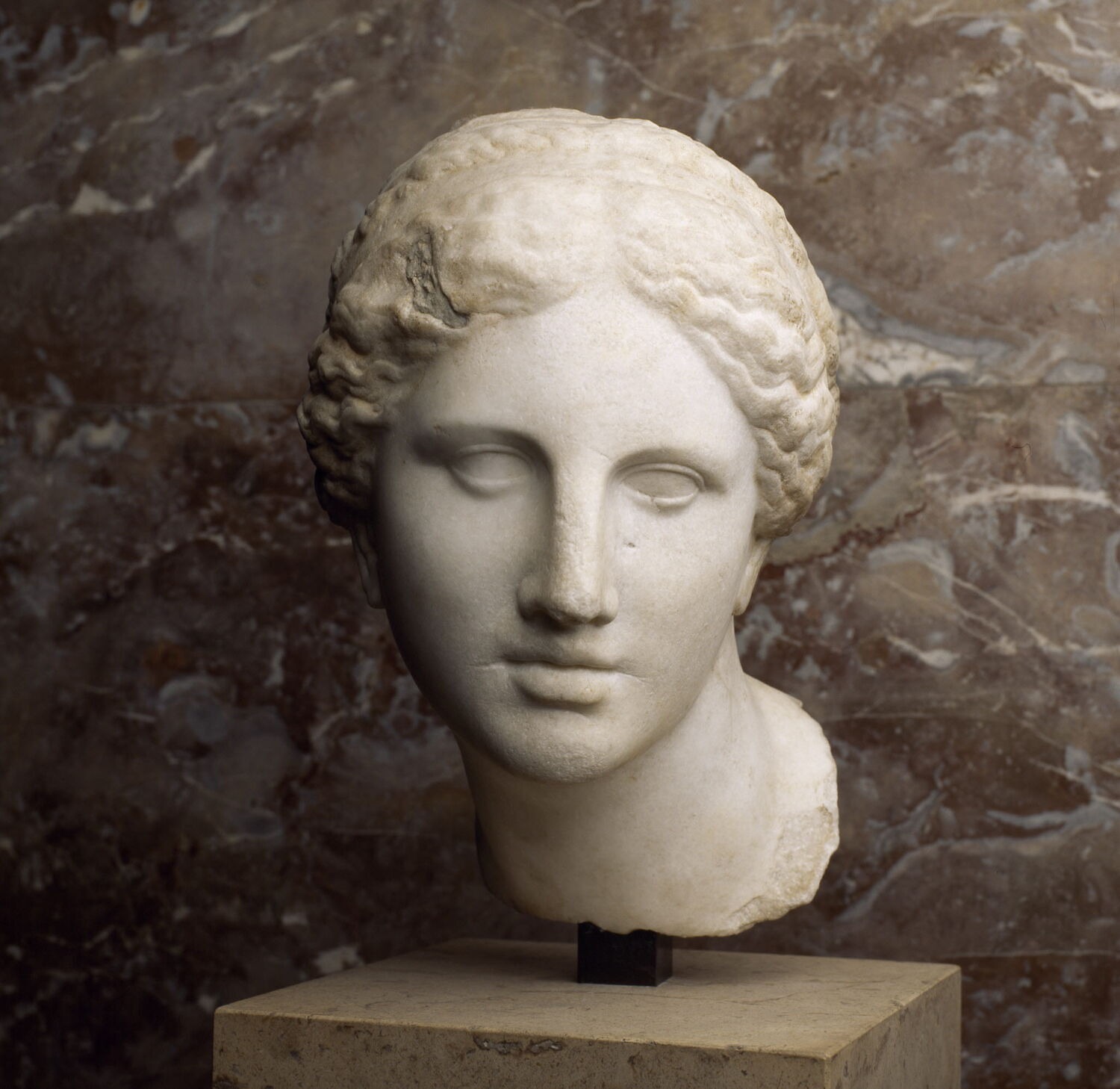
Image: Female head of the “Aphrodite of Cnidus” type, called “The Kaufmann Head” C. 150 BC. Provenance: Tralles (in present-day Turkey).
This lecture series is part of a year-long focus on the concept of beauty across diverse cultural and intellectual traditions, titled On Beauty: A Cross-Cultural Exploration of Aesthetic Thought
Beauty has long occupied a central place in human thought, shaping how societies understand art, ethics, emotion, and even truth. Yet, it is often treated as self-evident or universal, rather than as a concept shaped by culture, philosophy, and historical context. Across a year-long programme offered in parts, the ACT programme examines what beauty has meant to societies across the world, and how its meanings have been constructed, debated, and transformed over time. By foregrounding beauty as a critical focus, it invites a deeper engagement with the values and assumptions that underpin aesthetic experience across traditions.
The year-long programme begins with a 10 lecture series on the evolution of beauty within the Western philosophical tradition, from antiquity to the Enlightenment. In classical Greek thought, beauty was closely tied to proportion, harmony, and mathematical order, before being elevated by Plato to a transcendent Form, an eternal ideal imperfectly reflected in the material world. This metaphysical understanding was further developed by Plotinus, who conceived beauty as an emanation of the divine. The Renaissance marked a significant shift, grounding beauty in the study of the natural world, where human form, perspective, and symmetry became central to artistic and intellectual inquiry. By the Enlightenment, beauty was increasingly systematised: Edmund Burke distinguished the beautiful from the sublime, while Immanuel Kant defined aesthetic judgment as both subjective and universal. Together, these developments reveal a tradition negotiating between transcendence, perception, and reason in its understanding of beauty.
This trajectory, however, represents only one entry point into a far broader and more diverse history of beauty. The programme moves beyond this Western framework in subsequent lectures, offered separately, to explore how different cultures have conceived of beauty through emotion, ethics, spirituality, and perception. By placing these perspectives in dialogue, this year, the ACT programme opens up a richer, more expansive understanding of aesthetic experience across world traditions.
Lecture Schedule:
Monday, 10 August 2026
Introduction to the series On Beauty
Adira Thekkuveettil
Tuesday, 11 August 2026
Beauty as a bridge between the sensible and the intelligible in Plato
Prof. Frisbee Sheffield
Thursday, 13 August 2026
Beauty and the Virtuous Agent in Aristotle
Prof. Frisbee Sheffield
Tuesday, 25 August 2026
The Stoics on Beauty and Art
Prof. Aistė Čelkytė
Tuesday, 1 September 2026
Why Beauty Leads Beyond Itself: Plotinus on the Power of Beauty
Prof. Ota Gal
Tuesday, 8 September 2026
On Renaissance Beauty 1
Prof. Stéphane Touissant
Tuesday, 15 September 2026
On Renaissance Beauty 2
Prof. Stéphane Touissant
Tuesday, 29 September 2026
What kind of feeling is the experience of beauty for Kant?
Prof. Paul Kottman & Prof. Julia Peters
Wednesday, 30 September 2026
Hegel on disruption, beauty and self-knowledge
Prof. Paul Kottman & Prof. Julia Peters
Tuesday, 6 October 2026
The Sublime, The Beautiful and the Picturesque
Prof. Hélène Ibata
Tuesday, 13 October 2026
The Mirror of Poetry: Percy Shelley and the Romantic Conception of Beauty
Ross Wilson
Classes, unless otherwise stated, are from 6:30 pm to 8:30 pm IST on Tuesdays.
Students are expected to make a sincere attempt to attend all classes. To obtain an PG Certificate, students must have at least 72% attendance at live online classes (held on Tuesday evening).
Please read the Terms and Conditions carefully before registering.
August 10, 11, 13, 25 ; September 1, 8, 15, 22, 29 ; October 6, 13, 2026
6:30 - 8:30 PM IST
Fees
Registrations Closed
Duration
03 Nov - 01 Dec, 2026